
Research confirms that omega-3 can help reduce inflammation, which plays a key role in the development of diabetes.
Many studies have shown that inflammation plays a key role in type 1 and type 2 diabetes.[1] [2] Omega-3 has been found to reduce inflammation.
In 2007, researchers at the University of California, San Diego (UCSD) School of Medicine discovered that inflammation provoked by certain types of white blood cell leads to insulin resistance and Type 2 diabetes. The UCSD scientists proved that, by disabling the inflammatory pathway of these white blood cells, insulin resistance and the resulting Type 2 diabetes can be prevented.[3]
In 2010, UCSD reported another important discovery. The team of researchers identified the molecular mechanism that make omega-3 effective in reducing chronic inflammation and insulin resistance.[4] Insulin resistance is the physical condition in which the natural hormone insulin becomes less effective at regulating blood sugar levels in the body, leading to many severe health problems, most notably type 2 diabetes. The investigators discovered that those given omega-3 showed signs of reduced inflammation and were able to better process insulin.
 According to the lead researcher, Jerrold Olefsky, MD, when certain cells are exposed to omega-3, specifically DHA and EPA, cell receptors are activated which generate a strong anti-inflammatory effect. “It’s just an incredibly potent effect,” said Olefsky, a professor of medicine and associate dean of scientific affairs for the UC San Diego School of Medicine. “The omega-3 fatty acids switch on the receptor, killing the inflammatory response.”
Omega-3’s specifically address so many health conditions concerning people with diabetes. In addition to being an anti-inflammatory, omega-3s have also been proven to reduce triglyceride levels, normalize blood pressure and improve heart, kidney and eye health.
Omega-3s are one of the most highly researched and proven nutrients in the world, and are especially beneficial to people with type 1 and type 2 diabetes.
NOTE: Consult your doctor first to make sure my recommendations fit your special health needs.
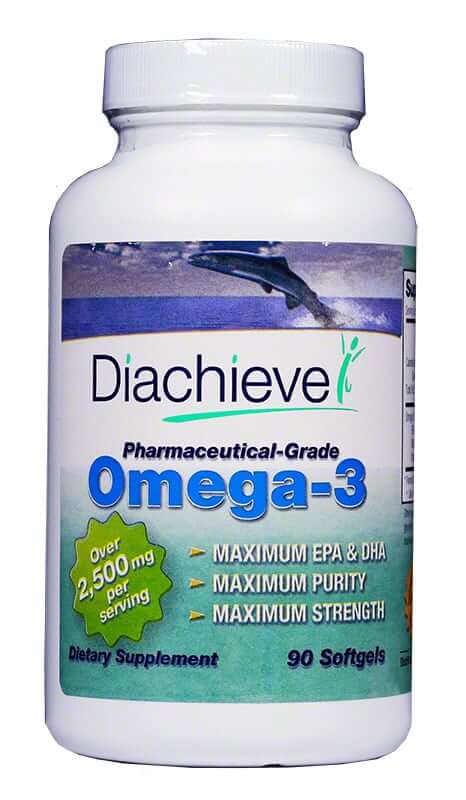
ADW Diabetes introduces its own pharmaceutical-grade Omega-3 that is free of mercury and other contaminants and contains the purest, highest ratio of EPA and DHA available in a fish oil supplement. Click here for more details. Regularly $24.99. Now for a limited time, get 40% OFF. Only $14.99 for 90 softgels.
- Green, E A; R A Flavell (1999-06). “Tumor necrosis factor-alpha and the progression of diabetes in non-obese diabetic mice”.Immunological Reviews 169: 11-22. ISSN 0105-2896. PMID 10450504.
- Chase, H Peter; Sonia Cooper, Iris Osberg, Lars C Stene,Katherine Barriga, Jill Norris, George S Eisenbarth, Marian Rewers (2004-10). “Elevated C-reactive protein levels in the development of type 1 diabetes”. Diabetes 53 (10): 2569-2573. ISSN 0012-1797. PMID 15448085.
- http://ucsdnews.ucsd.edu/newsrel/health/09-02FishOils.asp. Active as of 2/18/11
- http://www.sciencedaily.com/releases/2007/11/071106133106.htm. Active as of 2/18/11










Leave A Comment