
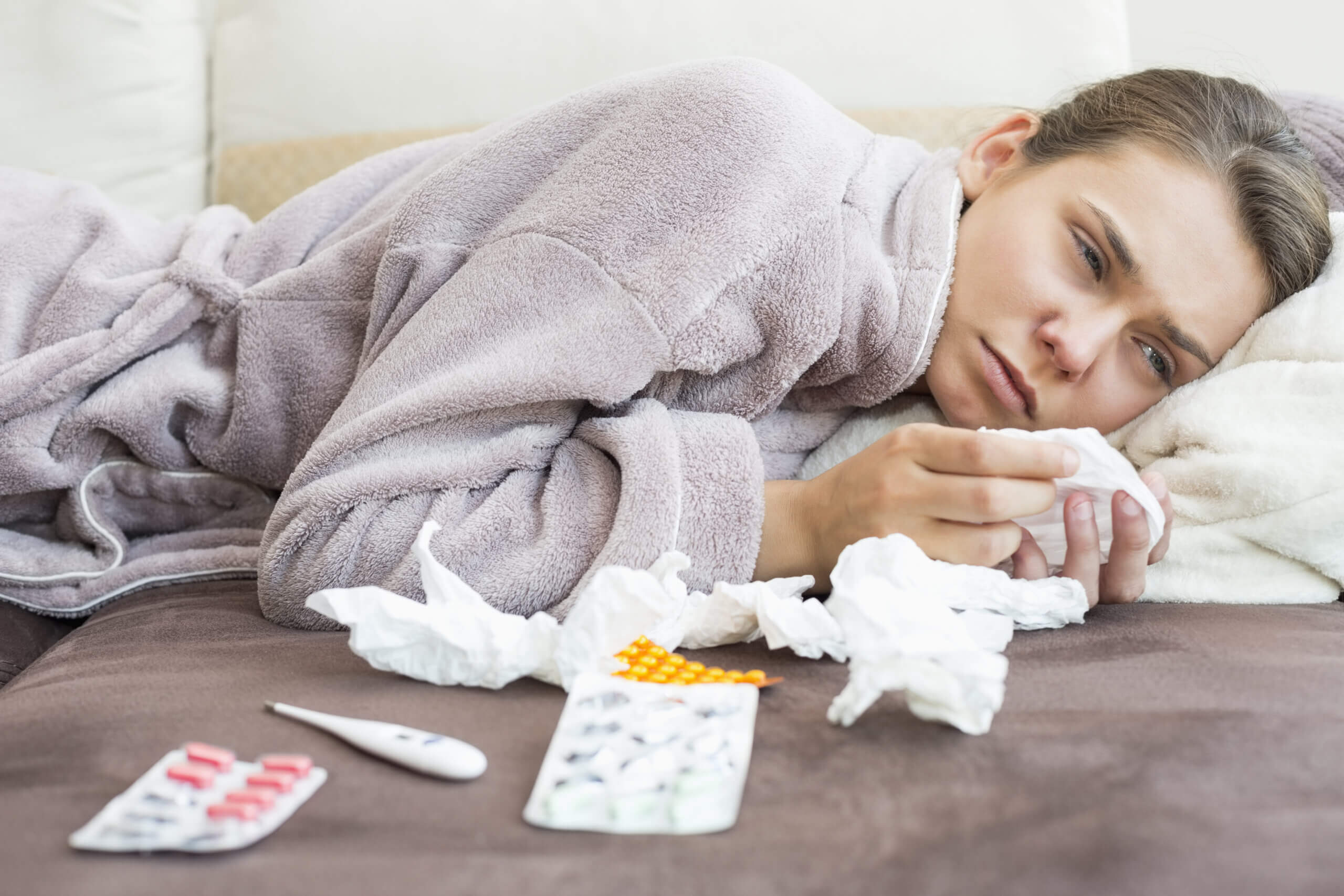
We are entering the fall season. You may not be able to avoid getting the flu 100% of the time, but there are certain steps you can take to lower your chances. Being in public places including the workplace, malls, restaurants, movie theatres, concert venues, department stores, or sports arenas increase your chance of getting the flu.
Thankfully, this season is full of festive and fun holidays and is the best time to take your annual flu shot. The flu virus usually presents and is most active during the months of November through February. It may last long into the month of May. There is no vaccine for the common cold but there is a flu vaccine.
“Influenza or the flu is a respiratory virus that can impact people year-round yet peaks during the colder months.” The flu affects the nose, throat, and lungs. About 8% of the US population develops the flu during peak season.
The flu can be spread from person to person through respiratory droplets from coughing, sneezing, talking or breathing, when you are “6 feet or less from the infected person.” The flu is not considered airborne which means “the flu virus does not linger in the air for hours like some other viruses.”
Flu symptoms come on quickly, which is quite different than a cold. Cold symptoms progress over a longer period. The common cold is much milder. It is usually a rhinovirus, mostly affecting your upper respiratory tract including your nose.
The CDC states there were “82 million flu related illnesses in 2024-2025. There were 1.3 million flu related hospitalizations and 130 thousand deaths in the US from the flu.” Getting the flu “increases your chance of having a heart attack or a stroke soon after flu recovery.
The largest populations of people to get vaccinated in 2024-2025 were those 65-74 years of age and those 75 yrs and older.” The flu virus is most contagious approximately 24 hours prior to the start of your symptoms and then the first 3-4 days of your actual illness.
Flu complications are more serious than you would suspect. They can include more hospitalizations, more cases of pneumonia, more chronic illness complications, and a higher incidence of physical decline after recovering from the flu.
Common flu symptoms:
- Severe body aches and pains
- Dizziness
- Symptoms come on quickly
- High fever in adults, but especially seen in young children
- Loss of appetite
- Dry cough
- Increased fatigue
- Flushed, hot skin
- Sneezing and nasal stuffiness
Have flu shot recommendations changed this year 2025-2026 per the CDC?
No, there are no significant recommendation changes for the flu shot for the year 2025-2026. The flu season was extremely active in 2024-2025, with the highest severity since 2010-2011. The CDC “estimates 42-56% effectiveness of this year’s flu shot.”
We rarely know the full impact of the flu on the US population until the following year. That is why “making a plan now with your health care provider” remains the best advice. Besides the CDC, the flu vaccine is recommended by The American Heart Association, The American Lung Association, The Endocrine Society and The National Foundation for Infectious Disease.
Easy recommendations when you receive the flu shot and have diabetes:
- There are 4 types of flu virus: A, B, C and D. Variant A and B are most responsible for epidemics. Flu strain A is the most common and harmful type.
- Each year the flu shot is updated with a different formulation. In 2024-2025, “less than 50% of Americans got a flu shot.”
- The 2025-2026 flu shot is a trivalent injection, meaning it will cover 2 variants of influenza A and 1 variant of influenza B.
- You do not need to be fasting to take the flu shot. You can eat and drink fluids immediately after getting the flu shot.
- The flu shot is given into the deltoid muscle of the upper arm since it can easily absorb the vaccine. It may cause a slight stinging sensation. It should be given in the non-dominant arm.
- Always inform your provider if you are allergic to eggs or if you have had a reaction to a flu shot in the past.
- Do not take NSAIDS (Nonsteroidal anti-inflammatory drugs) such as Advil, Aleve or aspirin before or immediately after your vaccine since it may weaken the immune response to the flu vaccine. You may take any of these for pain relief at bedtime.
- The flu vaccine is available at local pharmacies, minute clinics, urgent care centers, public health departments, your PCP (primary care) or internist’s office.
- The flu shot is covered by your commercial health insurance plan. Medicare also covers it. If you are paying out of pocket, it is approximately thirty dollars out of pocket for the low dose flu vaccine and 130 dollars out of pocket for the high dose flu vaccine.
- You can receive the flu shot, the COVID-19 vaccine and the RSV shot at the same time for convenience, or you can spread them out over a 2-week period. Ask your health care provider or pharmacist which schedule is best for you.
- Avoid heavy or extreme exercise immediately after getting a flu shot. “Intense exercise can increase dehydration, side effects of fatigue and muscle aches.”
- Drinking alcoholic beverages right after your shot can lead to dehydration, muscle aches, and headaches.
- Do rotate the arm that was injected for 1-3 minutes to get the vaccine to quickly enter your bloodstream.
- It takes 2 weeks to develop protection against the flu from the vaccine. Be aware that you may develop it if you are exposed before the 2-week period.
- The flu vaccine is made from an “inactivated virus which is not infectious.” It does not cause the flu. It resembles the flu virus, so your immune system builds up to protect you against getting it. Remember, it does not always prevent it, but it does lower your risk of developing the flu. It may also lower the severity of the illness.
- People over 65 should receive a higher dose flu vaccine, with or without diabetes, called Fluzone by Sanofi. It contains 3-4 times more antigen than the regular flu shot. People over 65 have a reduced immune system. Fluzone is recommended for regular use in those 6 months of age or older.
- The most common side-effects from receiving the flu vaccine include slight swelling, redness, tenderness and pain at the injection site, headache, slight fever, nausea, fatigue, or muscle aches.
- Severe side effects from the flu vaccine may occur, although infrequently. They may include chest or abdominal pain, swelling in the face, neck, lips, tongue or eyes, dizziness, rash/hives, wheezing or shortness of breath, confusion, blue lips or seizures. When experiencing severe side effects, call 911 or go directly to an emergency room.
Flu Mist
Flu Mist, made by AstraZeneca, is a new FDA-approved “first and only needle free nasal mist spray flu vaccine” to be given at home. It can be self-administered at home by adults 50 years or younger. It was initially approved by the FDA in 2003, but at that time, had to be administered by a health care professional.
Flu Mist needs to be prescribed by your health care provider but can be sent directly to your house for a shipping and handling fee of $ 8.99. Flu Mist uses a weakened version of live flu to provide protection. It uses different technology than the standard flu vaccine.
Side-effects may include a runny nose and congestion. Hopefully, with the added convenience and ability of taking it at home, it will increase the rate of flu prevention acceptance.
Most common reasons why people do not take an annual flu shot:
- It takes time to book the appointment
- It takes time to attend the appointment
- Inconvenience of waiting in a line for the actual injection
- People are misinformed and afraid it will actually “cause the flu”
- Possible out of pocket costs for the flu shot
- Fear of flu shot side-effects
- Do not think the flu shot is effective
- Do not think the flu is dangerous
What may increase your risk of developing the flu?
- Being a young child under the age of 2 or an adult over the age of 65, with a less developed or weaker immune system
- Blood disorders
- Spending a lot of time indoors in the fall and winter months
- Being around many different people
- Being in an indoor closed space
- Being immunocompromised
- Having a chronic illness including diabetes
- Being on chemotherapy
- Being pregnant
- Being a health care worker
- Working in a long-term rehab center
- Being under mental or physical stress
How can you test for the flu?
- Online live MD service.
- RIDT. Rapid influenza diagnostic test. This is done at your MDs office, Minute clinic, at home or at an urgent care center. There are many at home options online.
- Rapid molecular assay. This is a more accurate test and is always performed by a health care worker.
- RT-PCR. A provider swabs your nose/throat. It may take several hours to get the results. More accurate results.
- At home Flu/COVID 19 testing kits readily available at pharmacies and some big box stores.
- I HEALTH- tests for COVID 19 and Flu A and B. Also found for purchase online.
- CorDx TY fast at home Flu A and B and COVID 19.
Best advice for trying to prevent catching the flu:
It is not always possible to prevent the flu even when taking the flu vaccine, but these tips may help you keep the flu at bay.
- Avoid people who are already sick with the flu.
- Limit exposure to large crowds, especially indoor events during the fall and winter months.
- Wash your hands with soap and water for at least 20 seconds especially after each bathroom visit, before each meal, after you cough or sneeze or before you touch the mucus membranes on your face, eyes or mouth.
- Use a hand sanitizer with at least 60-70% alcohol when soap and water are not readily available.
- Cover your mouth or nose when coughing or sneezing with your elbow or tissue and then wash your hands immediately.
- Stay home if you develop any symptoms for at least 3-5 days.
- Stay physically active when you are not sick.
- Try to get 7-9 hours of quality sleep.
- Do not use wood-burning fireplaces, which can irritate your lungs.
- Stay hydrated.
- Never share personal items such as towels, toothbrushes or drinking cups.
- Use a humidifier if the air is extremely dry in your bedroom.
- Use a Hepa filter in your vacuum for added protection and dust particle removal.
- Do not smoke.
- Eat a balanced diet.
- Keep your blood sugars under control.
- Open windows when possible.
- Consider wearing a N-95 mask in crowded areas.
- Use ceiling fans for additional air circulation.
- Clean and disinfect frequently touched surface areas such as doorknobs, counter tops, phones, computer keyboards, sink faucets, refrigerator handles and remotes.
Other helpful information:
- You may be prescribed anti-virals such as Tamiflu to shorten the infection.
- Drink warm liquids especially soup and teas.
- Include green tea which contains “catechin” that has anti-viral properties.
- Sleep and rest.
- Ask your health care provider to recommend “diabetes friendly OTC” medications, lozenges and mouth rinses to keep your throat and mouth moist. This will help decrease throat irritation and cough.
- Never smoke with an active respiratory virus, including the flu.
- Eat foods rich in vitamin A, C, D and zinc such as pork, beef, turkey, sweet potatoes, kiwi, oranges, strawberries, salmon, spinach and low-fat milk.
- Add garlic and a bit of honey as they have “anti-viral, anti-microbial, anti-inflammatory and antioxidant properties.” Garlic and honey have been used for thousands of years (be sure to monitor blood sugars more frequently if consuming honey).
- Use electrolyte drinks that are sugar-free to increase hydration. You can use packets and add to water or purchase pre-bottled brands.
Remember, the fall and winter months also support a higher risk of developing COVID-19, RSV and pneumonia. These illnesses affect people with diabetes in a more extreme manner. Talk to your physician about what else you may need to do to keep healthy!
References:
- https://www.health.com/what-to-avoid-after-flu-shot-11801712
- https://www.health.com/condition/flu/when-does-flu-season-start-end
- https://www.health.com/condition/flu-overview
- https://www.cdc.gov/flu/prevention/index.html
- https://synopsi.medpagetoday.com/article/469121/respiratory-virus-season-has-arrived-what-to-know-about-getting-this
- https://www.cnn.com/2025/10/15/health/flu-covid-season-vaccine-tips-wellness
- https://www.cnn.com/2025/08/15/health/first-us-home-flu-vaccine-launch-flumist-astrazeneca
- https://www.medpagetoday.com/infectiousdisease/theflu/117670
- https://www.healthline.com/health/cold-flu/cold-flu-secrets
- https://www.sanofiflushots.com/flublok-influenza-vaccine/
- https://www.cdc.gov/media/releases/2024/s-t0627-vaccine-recommendations.html










Leave A Comment