

AI (Artificial Intelligence) will have a significant impact on our entire country in 2026. One of the fields which hopes to benefit tremendously from AI is the medical field. We already have wearables such as rings and watches which track important health data.
Included in the information of wearables are your heart rate, steps taken, sleep patterns, HRV (heart rate variability), resting heart rate, blood oxygen levels and workout recovery time. The added benefit which will soon be seen is pairing all this information with genetic testing, cycle tracking of your health patterns and lab results. All your results will then update automatically and in real time.
What we already know
AI can already predict certain diseases years ahead of the known displayed symptoms becoming present. It can “detect Alzheimer’s disease about 7 years ahead of typical symptoms and diagnosis and Parkinson’s disease about 5 years ahead of its symptoms and diagnosis.”
AI can already use voice recordings and speech patterns to recognize the future of developing Parkinson’s disease. By 2026, your smartphone will be able to detect early signs of dementia by tracking your sentence structure and word finding abilities.
Your smartphone will also recognize respiratory changes or illness from different cough patterns and breathing patterns while speaking. COVID can now be recognized on telemedicine visits with AI, by identifying the specific cough at “98% accuracy.” AI will be used for additional gene editing.
AI will help pharmaceutical companies speed up their clinical trials and create safer innovations, due to huge databases and collection of information. Additional robots will appear in the health care setting at a faster rate.
Robots will help alleviate hospital workplace shortages and human employees in the areas of PTs, OTs, dietitians, nurses, scrub techs and other disciplines dealing with burn-out. Human employees can again return to “actual patient care” instead of focusing on tedious tasks.
Telemedicine will make the leap of creating virtual hospitals. You will be able to confer with world medical experts on your condition and remain locally, within your own healthcare setting and physician network.
By 2026, “anyone who has a smartphone will have early warnings of physical or mental changes, available directly to them.” Medical conditions will now be discovered early on and allow for instant, yet methodical, intervention using “Predictive medicine.” Predictive medicine, a new medical discipline, “is considered the future of medicine.”
In 2026, more advanced breast cancer screening techniques and early detection of strokes and heart attacks will be available. In 2026, there will be earlier diagnoses and treatments for Huntington’s disease and muscular dystrophy.
Quantum computers are in the early phases of being used for healthcare in fields such as genetic processes and sequencing. Gene editing will become safer and more readily available. In our current medical world, we generally wait for symptoms to appear and after multiple non-invasive and invasive tests, we are finally diagnosed.
Until then, treatment and a possible cure is impossible to start. With AI involved in medicine, there will be no more relying on what works for most people or “giving drugs in the same quantity to a small, young woman verses a larger, older man”.
Medication doses and choices will be extremely specific. Personalization in medicine will become the new way, which will significantly affect how you are medically treated. New predictions by AI will help target your own health to your specific genes, lifestyle choices, current stress levels and biomarkers.
What are biomarkers?
Biomarkers are “traits measured in your blood, body fluids and tissues.” They help your health care provider understand what is happening inside your body and get a clearer picture of your overall health. They can also represent certain diseases or conditions and indicate the difference between normal body function compared to when something is wrong.
Biomarkers can also tell your physician “How well your body reacts to treatments for your disease.”
What can biomarkers indicate to your doctor?
- Diagnostic biomarkers – Can identify certain conditions.
- Biomarker trends – Can follow how your medical condition progresses.
- Predictive biomarkers – Can look ahead and direct future medical treatments.
- Risk biomarkers – Can look at your history, establish risks and see what conditions may occur in your future.
- Future biomarkers – Can assess how your future will look with this medical condition.
Examples of biomarkers:
- Blood pressure readings
- X-ray results
- CT-scan or MRI results
- Pulse rate
- Blood sugar readings
- Lab results
- Tumor biopsies
Key biomarkers in diabetes:
- Protein levels
- Lipid abnormalities
- Blood glucose readings, both immediate and A1C results
- Retinal disease indicators
- Kidney disease indicators
- Nerve damage indicators
- Foot ulcers
- Omentin levels
- Irisin levels
Biomarkers can be helpful in diagnosing early-stage cancer to give you an earlier treatment plan with improved outcomes. Biomarkers can rise and detect how serious a cancer is, then helping to stage it. Biomarkers can alert you to how well a treatment plan works.
They give you information about how likely the condition may occur or recur. Biomarkers are helpful in diagnosing mental health disorders and coming up with mental health therapies. AI will make these treatments more personalized, “instead of treating one size fits all and everyone the same.”
Health Care Information Systems
Instead of each member of your diabetes health care team (primary care physician, endocrinologist, cardiologist, podiatrist, dentist, pharmacist), acting independently, AI will allow them to all stay connected, compare your tests and results and share their recommendations.
Your medical information will flow between the private MD offices, pharmacies, other disciplines and hospital platforms. You will now have a complete picture of your medical conditions and proper treatments. Everyone on your team, including you, will be on the same page with all your information.”
At Home Tests paired with AI
AI allows consumers to take at home test kits and makes the results more mainstream. You will receive faster results and so will your health care team. AI and at-home test kits are used as a tool to help you understand your body better.
It may expand your horizon of what you could possibly prevent in the future. Usually, a sample is taken from either your blood, saliva, urine or stool.
Some at-home test kits include:
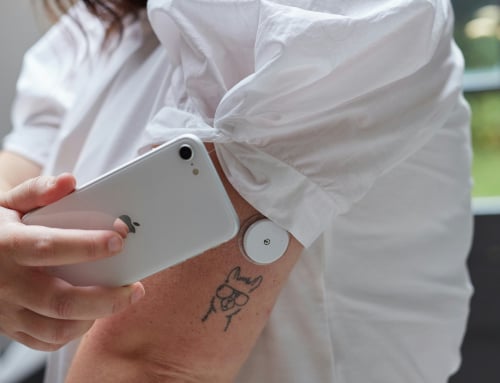
- CGMs – Continuous glucose monitors
- Blood glucose monitoring kits
- Hormone panel blood tests
- Genetic tests
- Urine tests – checking for blood or infection (UTIs)
- Yeast infection testing kits
- Colon cancer testing kits
- Microbiome/gut testing kits
- Vitamin level testing kits
- Infectious disease testing kits – COVID, flu, HIV, hepatitis
- Testosterone testing kits
- Pregnancy testing kits
Tips to remember when you are using at-home testing kits:
- Use only FDA approved at-home kits.
- Follow the kit instructions carefully and pay attention to the details.
- Look for expiration dates on the kit. Never use expired kits.
- Do not change your medical treatment based on the at-home results.
- At-home tests can provide helpful information, but they are not a replacement for guidance and treatment from your health care provider.
- Always follow up with a medical professional to discuss your results.
Platforms such as Whoop and Oura can upload your current bloodwork, and AI can add your daily stats from your own at home devices. AI and at-home devices may help you identify nutritional deficiencies, monitor your sleep patterns, explain to you how you recover from a workout and give you data about your inflammation markers such as homocysteine and CRP levels.
AI will be able “to monitor your weight response to your GLP-1 injections such as Ozempic and Mounjaro” and add dietary change advice in real time. It will also cross reference this information with your glucose patterns. Mood swings and mental changes and disorders will be identified by AI using your voice tone and the timing of your words.
What about AI and Diabetes?
According to The International Diabetes Federation (IDF), “50% of worldwide diabetes cases still remain undiagnosed.” There is tremendous room for improvement by using AI to help diagnose diabetes.
Examples of what is presently being studied using AI with diabetes at major medical centers and government institutions include:
1. Stanford University
Stanford University is using AI to discover hidden subtypes of type 2 diabetes, opening the door to more personalized diabetes care. They are utilizing “CGMs and the glucose curves measured by AI to find diabetes subtypes.” This suggests that diabetes is more complex and differs between individuals.
Right now, most people with diabetes are treated the exact same way. Each person has different degrees of insulin resistance (not being able to use your own insulin or not having enough insulin), different degrees of beta-cell dysfunction in the pancreas (where insulin is made), differences in liver glucose regulation and differences in gut hormone release dysfunction.
By identifying these differences using AI, it may be possible to create a precise medicine approach to improve care and treatment. “An A1C blood test result (3-month average) does not offer enough information to create an accurate treatment plan for individual patients with diabetes.”
2. John Hopkin’s University
Researchers from John Hopkin’s medicine and the John Hopkin’s Bloomberg School of Public Health reports that “an AI powered lifestyle intervention app for pre-diabetes reduced the risk of developing diabetes, similarly to traditional human-led diabetes education programs.”
This AI app can focus on pre-diabetes patients who can’t attend a human-led class due to time, finances, work schedule, transportation or distance issues. Having pre-diabetes that remains untreated by lifestyle changes and weight loss is likely to develop “into full blown type 2 diabetes within 5 years.”
Using the AI Diabetes Prevention Program (DPP) app can “reduce the risk of developing diabetes from pre-diabetes by 58%”, according to the CDC.
3. NIH – National Institutes of Health
The high prevalence of diabetes continues to cause morbidity, mortality and a huge economic impact on our country. Diabetes complications also carry a significant worldwide challenge. There is low adherence to taking diabetes medications as recommended, improper self-management skills being followed, and a shortage of diabetes specialists worldwide.
“AI can provide a significant opportunity to patients to achieve better diabetes care and treatment.” Digital Health Technologies (DHT) may be the answer to present diabetes treatment shortcomings. It can help with high-risk populations. Many patients are unable to attend in-person doctor visits for multiple reasons.
With AI involved in worldwide diabetes care, this will allow for more intervention, faster treatment, save time and money, and achieve improved outcomes. Management will become easier and more individualized. Personal guidance and informed decisions will be made more frequently.
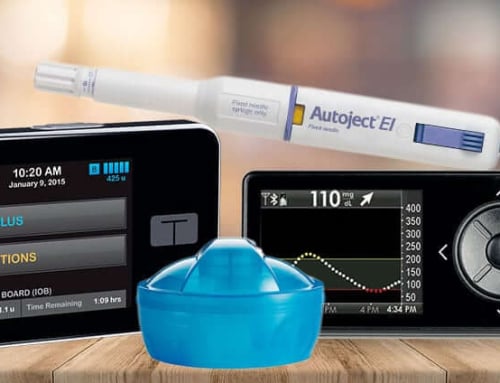
Diabetes personal devices and AI tools are quickly evolving to ensure better goal-oriented treatment plans for people with diabetes.
4. AI and Diabetes Drug Discovery
AI is creating breakthroughs in diabetes research, targeting new approaches and promising new diabetes drug therapies. Besides “repurposing existing diabetes medications to give new outcomes, new drug combinations are coming faster; this allows for quicker access for those affected by diabetes.”
Besides helping in diabetes diagnosis, AI enhances diabetes monitoring, management and personalized care plans.” Remote monitoring capabilities have already helped less developed countries care for their diabetes population. AI will continue to modernize and optimize their care.
Some Basic Questions concerning Healthcare and AI
- Will we embrace this “as revolutionary preventive care, consider it invasive surveillance or somewhere in between?”
- Who will make the final decisions on how far this can and will go?
- Will we be happy with pattern recognition of illnesses, including diabetes, or will it make us feel threatened?
- Will we be interested in our future health risks or dread the new information?
- Do we really want totally personalized care, or do we prefer to watch averages in our total population?
- What about data privacy concerns?
- How will these changes and advances affect our health insurance plans which already seem unstable?
- Are there legal safeguards and who will implement them? Who will enforce them?
- Will your access to all this new information put you on an easier path to prevention?
Final Thoughts
We at ADW do not have all the answers concerning AI and medicine. We are presenting the available information to help make you more aware. Hopefully, instead of making your medical care more impersonal, AI will allow your physician to gather all the information before they enter the room.
Then they will be able to engage more with you, the actual patient, instead of the computer. “The human touch” may reappear in the medical world. Presently it is called “the gift of time from AI” in medicine.
Artificial intelligence can deal with many basic items such as documentation, scheduling, watching health patterns and numbers, and comparing studies and statistics. This should give your physician more time to focus and tune in on their own clinical judgement, your questions, concerns and allow for more personal patient/professional time and understanding.
2026 medicine should be more than just your “annual 15-minute check-up”. AI will help you and your MD follow and track trends and patterns. You may be able to catch problems earlier, before they become serious medical illnesses.
Maybe AI will make medicine “work right” again. Hopefully, it will allow us to harness medical innovations more responsibly. Many times, the is no single right answer to a medical question. Hopefully, AI can help to find the right answers.
References:
- https://www.webmd.com/a-to-z-guides/biomarkers-overview
- https://www.mindbodygreen.com/articles/most-important-longevity-data-of-year-might-be-metabolites-its-deeply-comprehensive
- https://pmc.ncbi.nlm.nih.gov/articles/PMC11618249/
- https://medicine.stanford.edu/news/stories/2025/03/how-ai-and-glucose-monitors-could-transform-early-detection.html
- https://www.mindbodygreen.com/articles/how-ai-is-turning-your-health-data-into-actionable-insights?
- https://www.hopkinsmedicine.org/news/newsroom/news-releases/2025/10/ai-powered-diabetes-prevention-program-shows-similar-benefits-to-those-led-by-people
- https://www.forbes.com/sites/bernardmarr/2025/10/27/the-8-biggest-healthcare-technology-trends-to-watch-in-2026/











Leave A Comment