
Key Takeaways
- Checking your A1C is essential for determining if your range is normal or if you have pre-diabetes or diagnosed diabetes.
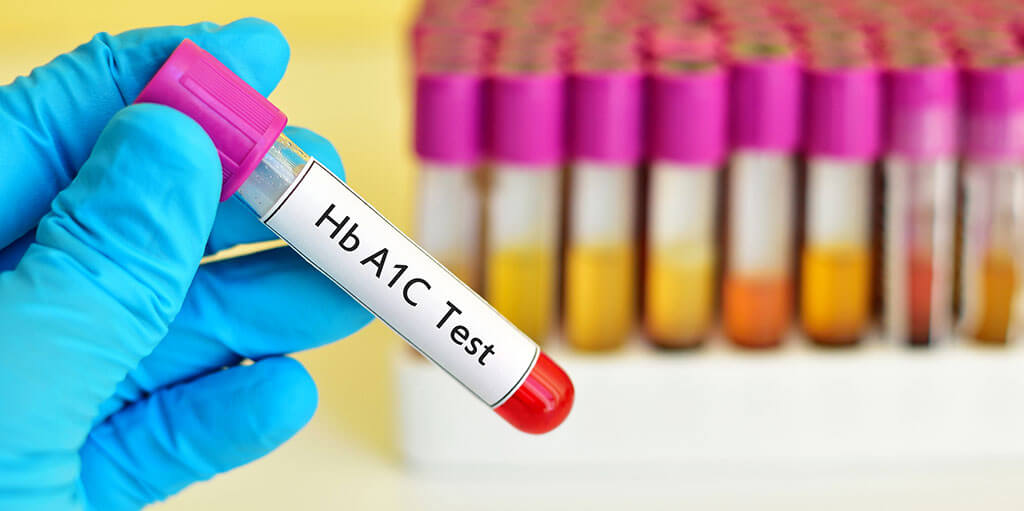
- What is A1C testing? A1C tests measure average blood sugar levels over the past 2 to 3 months.
- An A1C value of 4.5-5.6% is considered normal. A level of 5.7-6.4% is considered pre-diabetes. 6.5% or higher is considered diagnosed diabetes.
- A1C testing can be done at a healthcare professional’s office or at home with a home test kit.
A study done on over 7,500 patients showed:
“The higher the A1C level in patients with diabetes over age 54 that were admitted to the hospital for surgery, the more complications, the longer their stay in the ICU, the longer the overall hospital stay, the higher the need for mechanical ventilation or breathing tube insertion, and a higher risk of mortality in the 6 months after hospitalization.”
This study shows us how critical the A1C value really is and why knowing how to check your A1C at home is so vital.
What Is Diabetes?
Diabetes is defined as, “an inability to produce or respond to the hormone insulin.” Diabetes requires multiple physician visits to a variety of medical specialists, and a comprehensive kit of at-home diabetic supplies, along with a tremendous amount of self-care, discipline, and motivation.
Periodically, your main healthcare professional, whether they’re an internist, family practitioner, or endocrinologist, will require blood tests to be checked, along with blood pressure readings and complete foot checks to monitor your health. The blood tests ordered are recommended by the American Diabetes Association (ADA) to establish quality of care for you, the patient.
You will be required to have blood testing and urine testing with glucose urinalysis test strips. The blood tests should include a fasting glucose, an A1C test that covers blood glucose control, urine albumin, blood creatinine, and GFR, which covers kidney function, lipids, triglycerides, and inflammatory markers, which cover cardiovascular health.
Along with your healthcare professional, you need full access to these results and should completely review them as a team. Ask for a copy of your blood work and keep it in a file that holds all your medical records.
The A1C, Other Blood Glucose Tests, and Other Necessary Tests
The hemoglobin A1C (glycosylated hemoglobin/HbA1C) has been used to track long-term control of blood sugars in people with diagnosed diabetes. To decrease confusion, The American Association of Clinical Endocrinologists and The American College of Endocrinologists shortened the verbiage to just “A1C” in 2001.
What is A1C testing? In 2010, the ADA approved the A1C test as a diagnostic tool, stating, “A level of 6.5% or higher was a diabetes diagnosis.” The A1C test is now a true and important diagnostic test for people with diabetes or people who may be at risk for diabetes.
If you’ve been curious about how to check your A1C at home, it’s important to understand what A1C values mean.
- An A1C value of 4.5-5.6% is considered normal.
- A level of 5.7-6.4% is considered pre-diabetes.
- 6.5% or higher is considered diagnosed diabetes.
Other ways to diagnose diabetes are checking a fasting blood glucose test, where the results of 126mg/dl two times in a row are diagnosed diabetes, or a glucose tolerance test, where 200mg/dl or above 2 hours after ingesting a 75-gram glucose solution is diagnosed diabetes.
Checking your A1C measures the Average Blood Glucose (ABG) in the body over the previous 90-120 days. Daily monitoring is a “snapshot,” and the A1C is “a long, exposure photo or video.”
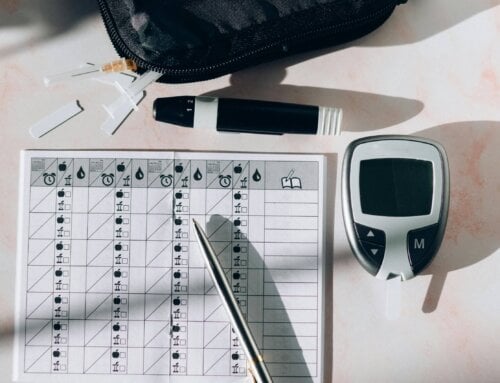
Monitoring your own glucose levels at home daily with diabetes testing kits is crucial for understanding how to eat, how much sleep is required, getting the right amount of exercise, identifying infections or illness, and dosing insulin. An A1C test complements self-monitoring by offering a more complete picture of how your treatment program is performing over the long term.
Since heart disease is the leading cause of death in people with diabetes, lipid and triglyceride blood values should also be checked. The HDL or healthy cholesterol should be at least 40mg/dl in men and 50 mg/dl in women. Exercise helps raise HDLs. The LDL should be below 100mg/dl.
Diet can influence LDLs, but genetics can, too. You may require a statin drug to bring down LDLs, so check with your healthcare professional.
Your triglycerides should be below 150 mg/dl and may be elevated when your blood sugars are uncontrolled. To lower triglycerides, lose weight, get blood sugar under control, exercise, cut out sugar, and add Omega-3 fatty acids, such as fatty fish or flaxseeds, to your diet.
Kidney function should be checked with blood work, at least consisting of creatinine, GFR, and a urine test for albumin.
- Albumin is a protein found in the blood, and when kidney function is reduced can be dumped into the urine, causing proteinuria. Normal albumin levels are less than 30mg/dL.
- GFR blood levels are normal at 90 and considered kidney failure at 15 or less.
- Creatinine blood levels are normal in men at 0.6-1.2 mg/dl and in women at 0.5-1.1mg/dl.
Checking Your A1C Levels
The A1C home test kit gives important information about your blood glucose control over 3 months. Understanding how to check your A1C at home is part of both short- and long-term planning and management.
Hemoglobin is an oxygen-carrying protein found in red blood cells. Red blood cells live for about 120 days and are then replaced by new ones. Each red blood cell carries a “memory” of daily blood glucose levels throughout its lifetime.
When surplus glucose is in the bloodstream, it hooks up with hemoglobin, causing higher A1C levels. Once they are hooked up together, they stay hooked up. These A1C levels are “remembered” by the red blood cells and can be analyzed by an A1C test.
Specifically, the A1C test shows whether your ABG is above normal by measuring the percentage of glycated hemoglobin.
Do you have to fast for an A1C blood test? No, you do not need to fast for an A1C, since it is an average of 3 months.
In a non-diabetic person, about 5% of all hemoglobin is glycated (or, attached to glucose). In a person with diabetes, this percentage can jump to anywhere above 6.5%-25% in extreme cases.
Those researching how to check my A1C at home should know that the A1C value is always reported as a percentage. The A1C reflects a combination of your fasting glucose level and your postprandial, after-eating, levels.
When too much glucose is in the bloodstream, hemoglobin cannot deliver as much oxygen as is needed by the body’s cells. Without oxygen, the cells suffer damage.
Numerous studies have reliably linked above normal A1C results with complications such as nerve (neuropathy), eye (retinopathy), kidney (nephropathy), cardiovascular disease, and foot amputation.
When Might an A1C Result Be Inaccurate?
There are some cases when checking your A1C can give inaccurate results. Your healthcare professional should be the one who decides when a different blood test, called a fructosamine, needs to be substituted. Fructosamine measures 2-3-week blood sugar averages.
Situations where A1C results may be inaccurate include:
- Anemia
- Sickle cell anemia
- Kidney disease
- Recent blood transfusions
- Iron deficiency
- Blood hemorrhages
- High doses of vitamin C or vitamin E
- Taking opioids, alcoholism, and taking large doses of aspirin, which may all interfere with glycation
When asking a healthcare professional how to check my A1C at home, it’s important to tell them about any factors that may affect the test’s accuracy.
A1C Results – What to Look for with Diabetes
For years, the recommendation from the ADA was to reach an A1C value of 7% or below for every patient with diabetes. The AACE always recommended an A1C of 6.5% or below. The Association of Family Practitioners has recently raised the desired A1C amount to around 8% for certain patients.
The best advice is to work with your healthcare professional team to decide which A1C result is best for you.
- Usually, young, newly diagnosed patients should be well controlled at an A1C of 6.5% or less.
- Elderly patients and those with pre-existing heart disease should be allowed to have a higher A1C, up to 8-8.5%.
“For every point decrease, i.e., from 12% to 11% A1C, there is a corresponding 37% decrease in microvascular diabetes complications and a 21% less chance of death from diabetes.”
It is still believed that “the higher the A1C and the longer it stays elevated, the more diabetes complications to the eye, kidney, nerves, feet, and cardiac system will be experienced by the patient.”
What About Hypoglycemia?
Checking your A1C and maintaining a well-controlled A1C is great for you and your diabetes, but not when it becomes too low, as it may increase your risk of hypoglycemia. This is seen especially in type 1 diabetes.
If you test daily and often find blood sugar levels below 70mg/dL, you may need to change your treatment plan after checking with your physician.
Common signs and symptoms of low blood sugar consist of:
- Feeling dizzy, shaky, and/or light-headed
- Sweating, clamminess, and/or chills
- Having a rapid heartbeat
- Feeling weak/tired
- Hunger
- Headache
- Nausea
- Impatience/irritability
- Blurred/impaired vision
- Clumsiness/difficulty with coordination
- Color draining from skin
- Confusion
- Nightmares/crying out while sleeping
Hypoglycemia can eventually lead to impaired neurological function, convulsions, and a coma if not properly treated. Always be prepared with glucose products, such as tablets, gels, or shots. You may need to follow up with a small snack of a protein and one serving of a carbohydrate, such as a small apple with 1-2 spoons of nut butter, if not right before a meal.
Home A1C Tests
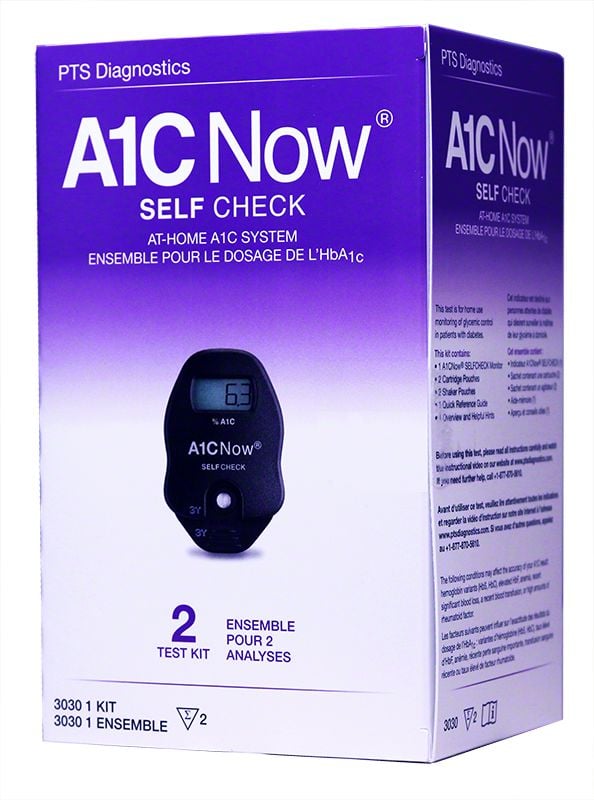 When asking a healthcare professional how to check my A1C at home, you may need to consider how frequently testing is necessary. Your healthcare professional will decide how often you will need an A1C test based on your previous A1C test results and blood sugar control.
What is A1C testing frequency? As a rule, this kind of test is repeated somewhere between every 3-6 months. An extra A1C test may be added when you have a change in medication (especially insulin), eating patterns, or exercise routine.
A1C blood tests are covered by most health insurance plans, including Medicare. Home A1C tests are also available to help you know how well your diabetes is controlled between doctor visits. These tests are easy to use, compact, reasonably priced, convenient, and accurate. Home A1C tests may or may not be covered by your health insurance.
When you purchase a home A1C kit, follow these tips:
- Do not store them in a hot, humid room, such as the bathroom or kitchen.
- Keep unused kits in a bedroom drawer or cabinet.
- Make sure to get a good drop of blood (normally requires less blood than A1C test at the hospital).
- Check the kit’s expiration date. Do not use expired testing kits.
- You do not need to fast.
- All home kits come with directions/instructions on how to check A1C. They typically take about 5 minutes to give results.
Tips to Lower Your A1C
You may be able to get your A1C level down by:
- Exercising regularly
- Losing weight
- Watching portion sizes
- Taking your medication as prescribed and on time
- Testing daily to follow blood sugar patterns
- Practicing stress management
- Sleeping 7-8 hours nightly
- Getting a flu and pneumonia shot
- Avoiding infections
- Counting carbohydrate
In addition to consulting with a healthcare professional about how to check my A1C at home, you may want to ask them for personalized guidance on lowering your A1C.
If your diabetes treatment program is still not working effectively, checking your A1C with an A1C test may alert you and your healthcare team that further adjustments are needed.
Although the A1C test is an important tool for diabetes management, it’s vital to emphasize that the test is not a replacement for daily monitoring of blood glucose levels and proper follow-up with a healthcare professional. Check with a healthcare professional to determine how A1C home test kits should fit into your diabetes management plan.
NOTE: Consult your healthcare professional first to make sure my recommendations fit your special health needs.









Leave A Comment