
Key Takeaways
- Running blood glucose curves at home is less stressful, more accurate, and more cost-effective for diabetic pets.
- Collecting a blood sample becomes easier with proper preparation, including warming the area and using the right tools.
- With practice and guidance, most pet owners can successfully monitor their pet’s blood glucose at home.
Checking Blood Glucose in Diabetic Pets at Home
As a veterinarian, I have a strong preference for my clients with diabetic pets to run their blood glucose curves at home. It is less stressful for the pet at home than to be kenneled in a vet clinic for the day. Anxiety in the clinic can falsely elevate blood glucose, a phenomenon known as “stress hyperglycemia.”
Furthermore, the cost of a handful of pet glucose test strips is much more affordable than paying the vet staff to run the blood glucose curve for you. Over the years, that’s a big savings. You’d think no one would have a glucose curve run at the clinic. Wrong! Some folks are very resistant to checking Fluffy’s blood glucose at home, especially when they hear they have to get a blood sample.
Overcoming Hesitation Around Blood Sampling
Perhaps the biggest deterrent to clients checking a pet’s blood glucose is that they feel like “meanies” by poking their darling pet to get a blood sample. Yes, they poke Fluffy with a needle to give an insulin injection, but blood is rarely seen with an insulin injection.
Maybe if the pet has very short hair, we might see a hint of blood at the injection site, but most of the time, no blood is seen. I know some really brave people who still turn green at the sight of blood.
Pet Lancets and Lancing Devices
The good news is that current blood glucose meters require only a very small droplet of blood to yield a reading. As you become more proficient, the sight of blood (if you are squeamish) becomes less impactful, especially if you follow a few simple tricks.
Lancing devices are not complicated. I prefer devices with an adjustable depth setting. If your pet bleeds easily, you can adjust to a more shallow penetration.
Prepping for the Blood Sample
First, warm the area where you plan to poke your pet. Whenever I diagnose a diabetic pet, I give the client a sock filled with uncooked rice or beans. I place 3 or 4 tablespoons in stockingette material with a knot on each end. You could also use a baby sock with a knot to keep the contents enclosed.
The idea is to create a soft “warm pack” that can be microwaved for a few seconds. It only needs to be about an inch or two in diameter — just enough to warm the blood collection site without being uncomfortable for your pet. This warmth helps blood vessels dilate, making it easier to collect a sample.
Next, always have a tissue or piece of gauze ready to place over the site after collecting blood. Use it to absorb excess blood and apply gentle pressure to prevent bruising.
Where to Poke Your Pet
Finally, we will discuss where to poke your pet. I won’t lie – some pets are easier than others. Most are compliant, especially if you have another person to help distract them. Occasionally, you may have a pet that is more temperamental and might nip. In those cases, it may be best to have the curve run at the clinic or consider alternatives like fructosamine or A1C testing.
Assuming your pet is cooperative, you can explore different collection sites. Larger pets are generally easier, while very small pets can be more challenging.
My favorite spot for cats and small dogs is the marginal ear vein. If you shine a flashlight along the edge of the ear, you can often see the vein. Your vet can also shave a small area to make it easier to locate. You can aim the lancet directly at the vein or use the non-haired inner ear area if it is thick enough. The warm sock trick can make a big difference here.
Some pet owners, especially those with larger dogs, have success using the inside of the cheek. They flip the lip outward, dab away saliva, and proceed. If you have a relaxed dog, this can be a good option.
Hairless elbow calluses on older dogs are another great location for collecting blood. I generally avoid using feet or toes, as many pets are already sensitive in those areas. You can also ask your vet about shaving a spot on the hip if your pet has enough tissue there.
Practice and Confidence
Poking your pet takes bravery and perseverance. Sometimes I show clients how to check blood glucose, and when they get home, they feel unsure. It’s a lot to take in.
I always tell them they can come back as often as needed for guidance. Practice makes perfect, and with time, most pet owners become confident and comfortable managing their pet’s care at home.



I have the AlphaTrak 3 meter for my 12 year old femaile Shih Tzu. We recently had to start testing her BG regularly and the cose of the strips is pretty costly (I am in Canada) the cheapest I have been able to find them was $111 with tax for 50 strips. Is there a more economical way? A different meter I could use for regular testing…..anything?
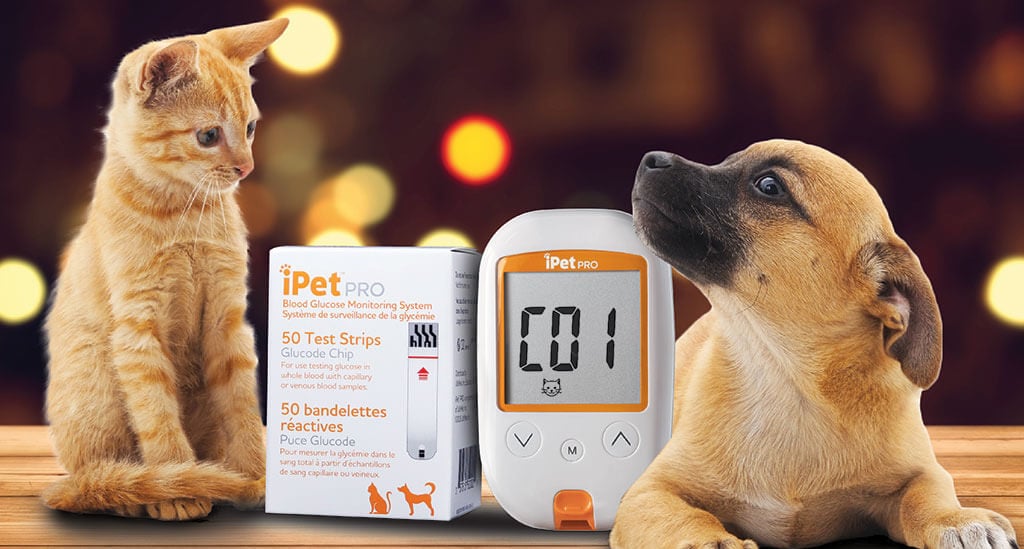
The Alphatrak 3 is still my favorite pet blood glucose meter for its ease of use and simplicity. The Ipet Pro test strips are slightly lower the the Alphatrak test strips, but nominally so. Since you already have the alphatrak meter and since most vets trust the numbers from the Alphatrak (as it has been the industry standard for decades and the meter most vets use) I think you should stick with the Alphatrak. Do remember that it needs such a small amount of blood to get a reading that fewer vets have owners take the pets into the clinic for blood glucose curves than they used to. In hospital blood glucose curves got really pricey.
I have found easiest spot is tip of tail. Is this ok?
If you can get blood from the tip of the tail, then of course continue. The tail isn’t typically very meaty and not a site I’ve ever used, but if it works for your pet it should be as accurate as blood from any other site. Good job home testing!!
Best, Joi
Thank you. These are very helpful tips. It is good to hear that it may take a week or two to get the hang of obtaining a blood drop for testing. I am reassured that there is hope for this 44 year nurse who has done thousands of glucose checks on humans. We are four days post diagnosis and my squirmy yorkie is giving us a run for our money. Silly of me to think my human experience would help. Not. I will try warming the ear tomorrow
I have a very small (6.5 pounds) cat who is hyperthyroid and now, diabetic. The veins on her black ears are exceptionally thin and hard to see.
I bought the alphatrac 3 as advised by my vet, and for 3 days have repeatedly tried to get blood from both my cat’s ear and toe. We’ve used a hot wet washcloth, lighted magnifying glasses, the cotton ball for support, applying pressure and so far have gotten a fraction of a bead of blood. As I get frequent labs myself and have thin and uncooperative veins too, I’ve twice consulted my own nurses. They also recommended hot compresses. I also checked her skin for hydration ( seems fine) and gave her a dish of tuna flavored water 2 hours ahead of testing.
My cat is incredibly cooperative, even after 3 days of 4 pokes each. I’m not timid – I rehabbed wilds and have done worse. I’ve once tried using the lancet without the injector and went through the ear. The injector point is very large so seeing where the lancet is aimed is impossible.
The one thing I have not tried is practicing on my 2 huge male cats.
Going into the vet is not an option for another week as we have 2 houses and are 4 hours from where our vet is.
Ideas?
Starting Monday on using lancets on my newly diagnosed Min Pin, both diabetic and Cushings. Have help in distracting her at meal times shots, but worried sick I will not be able to get blood draws. First day requires every two hours for the draws. LOVE this site.
Warming the ear or site of blood collection really helps, doesn’t it!
So glad I found this. I have a Puggle and she’s easy to work with. But have NO luck getting blood. I had no idea about warming the spot or using adjustable depth lancets. Any brand recommendations?
When she was in the hospital a month ago we were given a freestyle libre monitor. My vet told me to ask the pharmacist for the correct lancet and test strips. I got with the pharmacist recommends and went poking my dog. Eight times! I tried toe pads on all paws, ear, hip and lip… No blood at all. My vet was no help, other than saying to do an overnight for the insulin curve. I won’t do that, it’ll just stress my girl out and give incorrect results.
Warming the spot helps significantly. Placing a cotton ball between the ear and your finger and putting a bit of pressure between the landing device and the ear also helps. You may try different lancing devices, the Alphatrak meter is far and away my favorite meter, it the current lancing device that comes with the kit isn’t as user friendly as the lancing device that used to come with the meter. You can use whichever lancing device and lancet you wish. What needs to be paired is the meter and the test strip for that particular meter.
Hello linda
My Minpin also has diabetes and Cushings. Also heart murmurs. Diagnosed about a year ago. Have you been able to get glucose levels under control?
How many times can I use the same lancet for my dog or do I need to use new one each time I’m going to purchase Alpha Track 2 blood glucose kit it doesn’t come with a lot of lancets.
Good question. Lancets should be used only once as they will dull after use and more 8 portantlyif there is dried blood from the first use it could affect the subsequent reading. If you are in a pinch, you can use any lancet. Lancets are universal to lancing devices and and you can use any brand with your Alphatrak meter. Meters and strips are another story—-those need to be paired with the same brand.
My 16year old Romanian rescue’s blood doesn’t always bead. I do the rice sock. If it doesn’t bead we can get an incorrect low reading or an error code E1 on the Alphatrak. Any advice please, I use the Genteel lancer. Thank you very much.
It sounds as if you aren’t getting enough blood. Or perhaps the blood is smearing into the fur. Perhaps ask your vet to clip the fur on the ear!
Do I push the lancet into the skin of the ear and then push the trigger?
Here is my approach to a lancet: Have a cotton ball between the pet’s ear and your finger. Press the lancet snugly against the inside (non haired or shaved ) aspect of the ear. Then push the lancing trigger. If you don’t hold it snug with light pressure you may not get adequate blood. When you first learn you will want the lancing device set at the deepest setting til you you now how shallow you can set it and get blood.
Of course if you are using a site other than the ear you won’t put your finger behind the area for support but still want it snug to the skin.
For diabetic glucose testing, I’ve been having issues with the ear flap test. I saw some get the blood sample from Lansing a shaved area at the tail base. Is it OK to try this other site? My 19 lb puggle shakes his head and its hard to keep him still using the ear flap method.
Hi Dr. Sutton and thanks for the article. Can you recommend a lancet? My 15 pound chihuahua mix was diagnosed this month, and I have purchased testing equipment. I just can’t bring myself to poke home more than the two insulin shts. I read safety lancets are helpful, but the spring clicks and I’m worried that will startle him. I was searching for silent safety lancets and came across your article. If you know of such lancets, can you please tell me? Thank you I’m advance.
First, try the lancet that came with your meter. Your pet might not react as badly as you worry may happen. Do remember to warm up the ear (or wherever you plan to poke) before getting the sample. My trick of putting some uncooked beans or uncooked rice in a baby sock may help. Warm the sock of beans or rice in the microwave to warm up the area so blood flows readily. You can do this! And your veterinarian or his nurses can help you til you have mastered the technique.
I wish I was aware of a quiet lancing device. They tend to make a clicking noise.
I have a senior Doxie (17yo) that is hard to get a blood sample from him. He just doesn’t bleed with the needle puncture even at 5 deep… I will try the warm RICE soak this evening to see if it works. I hope so because I have tried many times and he is grouchy and tries to bite the glucose puncture tool.
I hope that the warm sock of uncooked rice or beans helps! If not, ask your family vet or vet nurse for assistance. Good luck!
Hi Dr Joi,
Thank you for the tip on using a sock with rice. I have a 6 year old pug and I am having trouble getting a blood sample. The ear and lip he would not let me do, since his face is so small he just shakes me away! I can do his foot pad, but only if I distract him with food. I have been using a little low sodium canned chicken, but sometimes he eats it before I can get the test! I was wondering what other foods I can distract him with while trying to get a sample?
Thanks, Jessica
I’d recommend you ask your vet about which foods are appropriate for your pet considering any conditions he has. If you have help you could have a friend help pet your dog. Or, a friend could hold the treat in the hand while you check the blood glucose. If your vet likes pill pockets you could smash one onto the table to make it more difficult and buy you some time. I think the friend idea is the best option.
I hope the warm sock of rice helps!
🙂 Joi
Ihave a 12yr old male diabetic cat, Tiger. I feed Tiger can food but my Vet has always wanted me to keep dry food available
incase his sugar drops during the day. Right now TIger is recoverng from an intestial blockage. He is starting to eat on his own, at this point I’m just happy he is eating can or dry food and drinking. His sugar has elevated and is high right now. He was on 3units insulin but because of vomiting with blockage there were days his BG was low and didnt give insulin. Started back with insulin 0.75units and working our way up with BG monitoring. Now he is at 1.5units for the next few days. It’s been just over a week since the trip to the ER Vet and hadnt vomited the whole time until just last night. That makes me very nervous.
He isn’t eating his meal twice a day like he used to but has been grasing throught the day. At this point I pray he eats and keeps the food down and we can get back on track. Tiger is a chewer of paper and straps of tote bags. I try to keep everything high or in plastic container. Even closed off sewing/office room for now.
Last night Tiger was on a search and find mission. First time since he has been back from ER visit he was up and going through every room of the house. Seems like he was checking for paper to chew. Is he looking for paper to make him throw up, thinking it would calm his stomach? But the paper is making him threw up and could be causing the blockage. I wish he would use his words and tell me whats wrong.
Some tmes I want to remove dry food because I think his BG levels would be lower but what happens when his sugar drops to low?
Tiger’s BG has been as low as 46 before the blockage problem and as high as 545. Recently BG went from 345 midday to 545 at evening feeding 6hrs later. Guess I just have to wait it out unitl we get Tiger back to a normal insulin amounts. Been very stressful last 2 weeks.
Oops! I somehow didn’t receive notification that you had written a response. Please forgive my delayed response!!
Dry food does tend to throw a wrench in a diabetic cat’s blood glucose compared to canned food. Diabetic cats tend to do much better with canned food an dry food due to the carb content of canned versus dry. The low carb diet tends to result in better blood glucose regulation for diabetic cats.
I hope he is doing better!
🙂 Joi